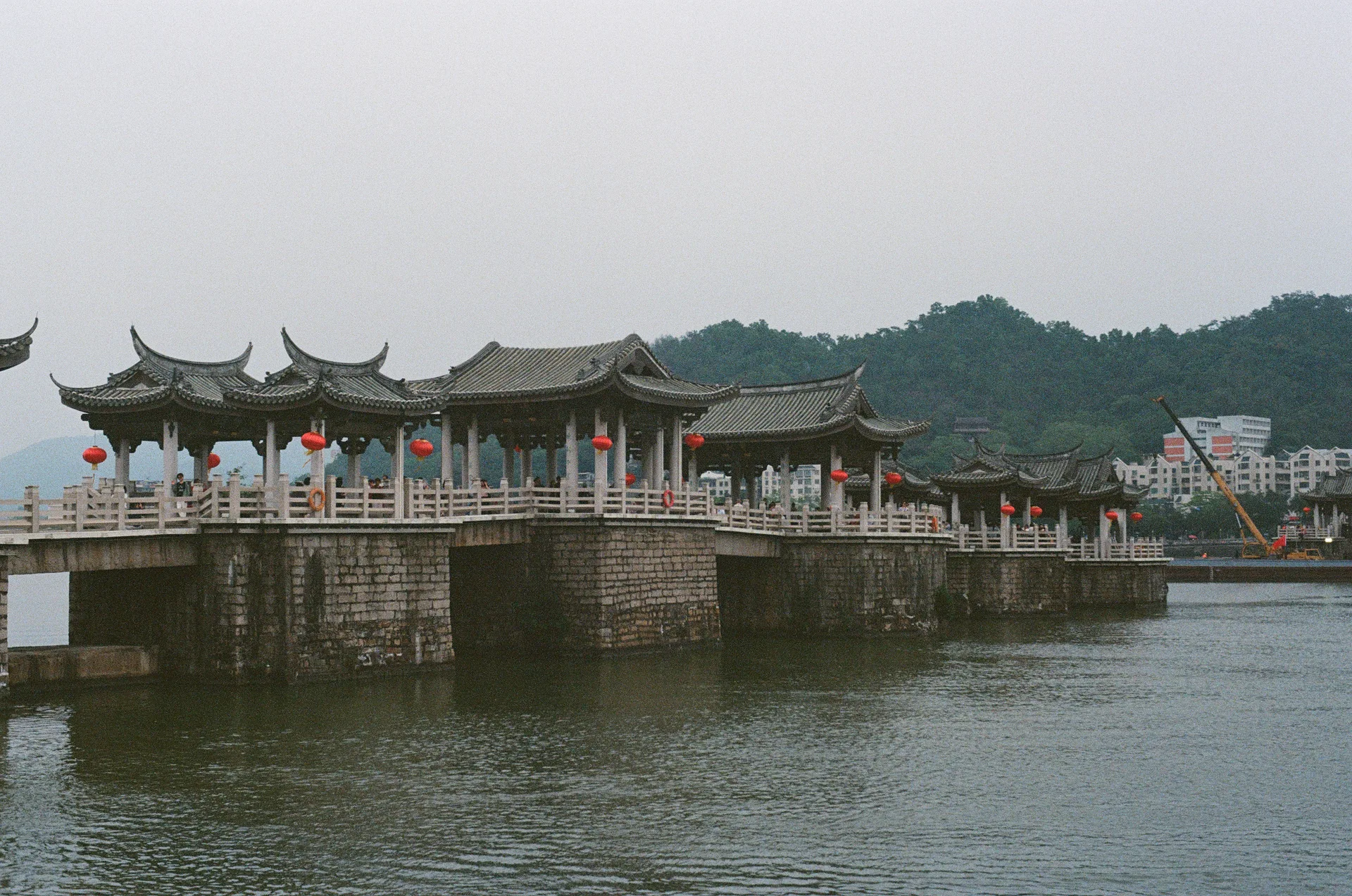
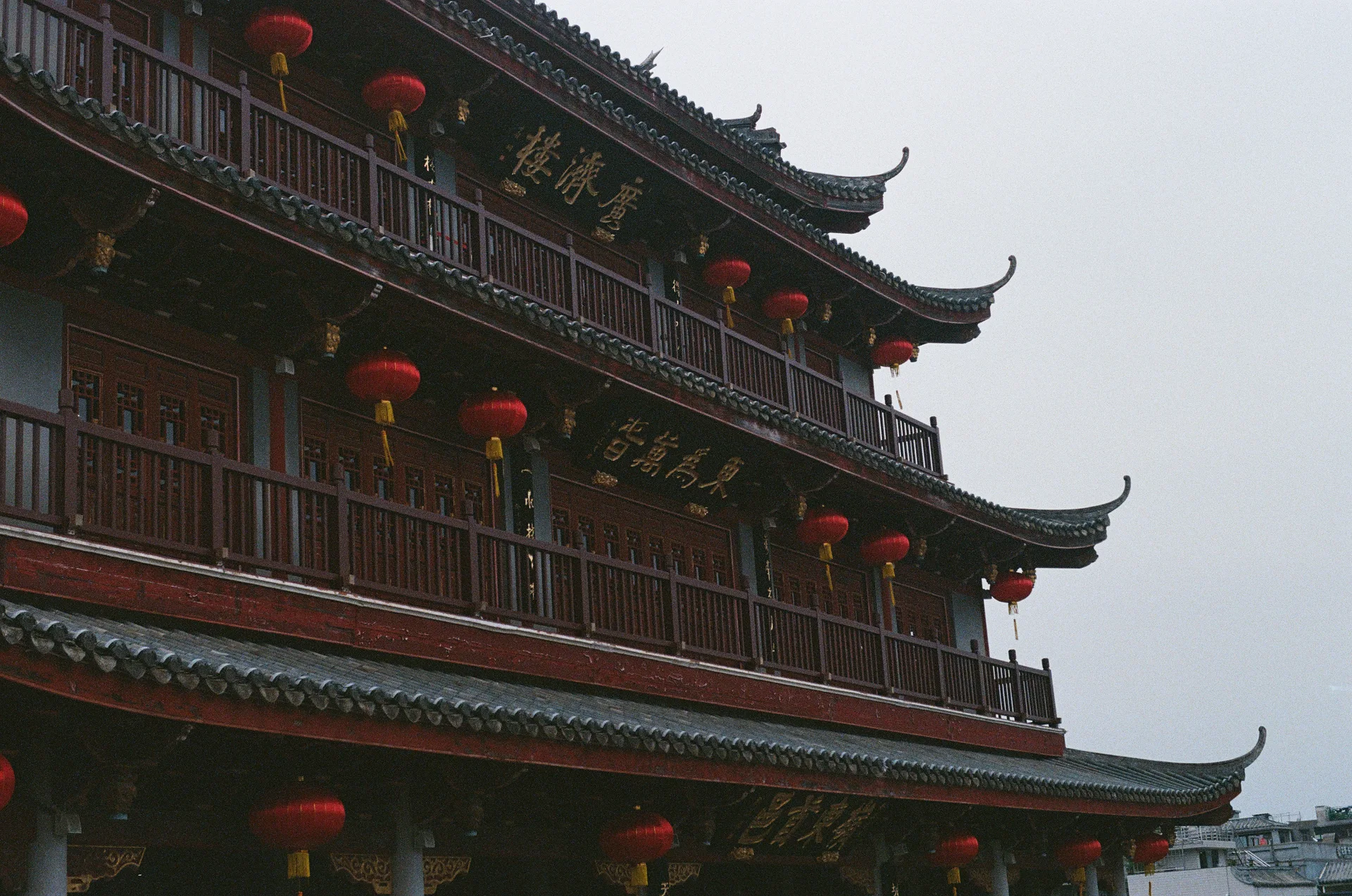
Chaozhou, Guangdong
Chaozhou — Tea and the Tradition of Gongfu
A Historic Tea Region
Chaozhou’s relationship with tea reaches back more than 900 years, with local records tracing cultivation to at least the Song dynasty. Tea around the Phoenix Mountains is also closely connected with the She people, whose ancestors are traditionally associated with its early use and cultivation.
A local legend tells of the young Song emperor Zhao Bing receiving tea from mountain villagers in the late thirteenth century. The old trees associated with this tradition became known as Song Zhong, or “Song Dynasty Cultivar.” Although the story cannot be verified in every detail, it reflects the region’s long relationship with tea.
Tea in the Ming Dynasty
The 1547 Chaozhou Prefecture Gazetteer records leaf and bud teas from Raoping County being presented as imperial tribute. Tea had become an established regional product, while growers increasingly selected individual trees for distinctive qualities — a practice central to Dancong, meaning “single bush” or “single clump.”
Refinement During the Qing Dynasty
A 1687 Raoping gazetteer describes tea cultivation, harvesting, firing and rolling, showing a growing understanding of how processing shaped the finished leaf. Over time, withering, tossing, oxidation and roasting became increasingly refined, developing the fragrance and depth associated with Phoenix Dancong.
Gongfu Culture & Yujian’s Studio
The Development of Gongfu Tea
The region’s tea history is inseparable from Chaozhou Gongfu tea, 潮州工夫茶.
Here, gongfu refers to the skill, attention and practiced technique required to prepare tea well. The Chaozhou tradition developed into a complete system of brewing, tasting, etiquette and hospitality, with its mature form commonly associated with the late Ming and Qing periods.
Small vessels, a high proportion of leaf, very short infusions and repeated rounds of brewing are used to concentrate a tea’s fragrance, texture and changing character.
The Role of Teaware
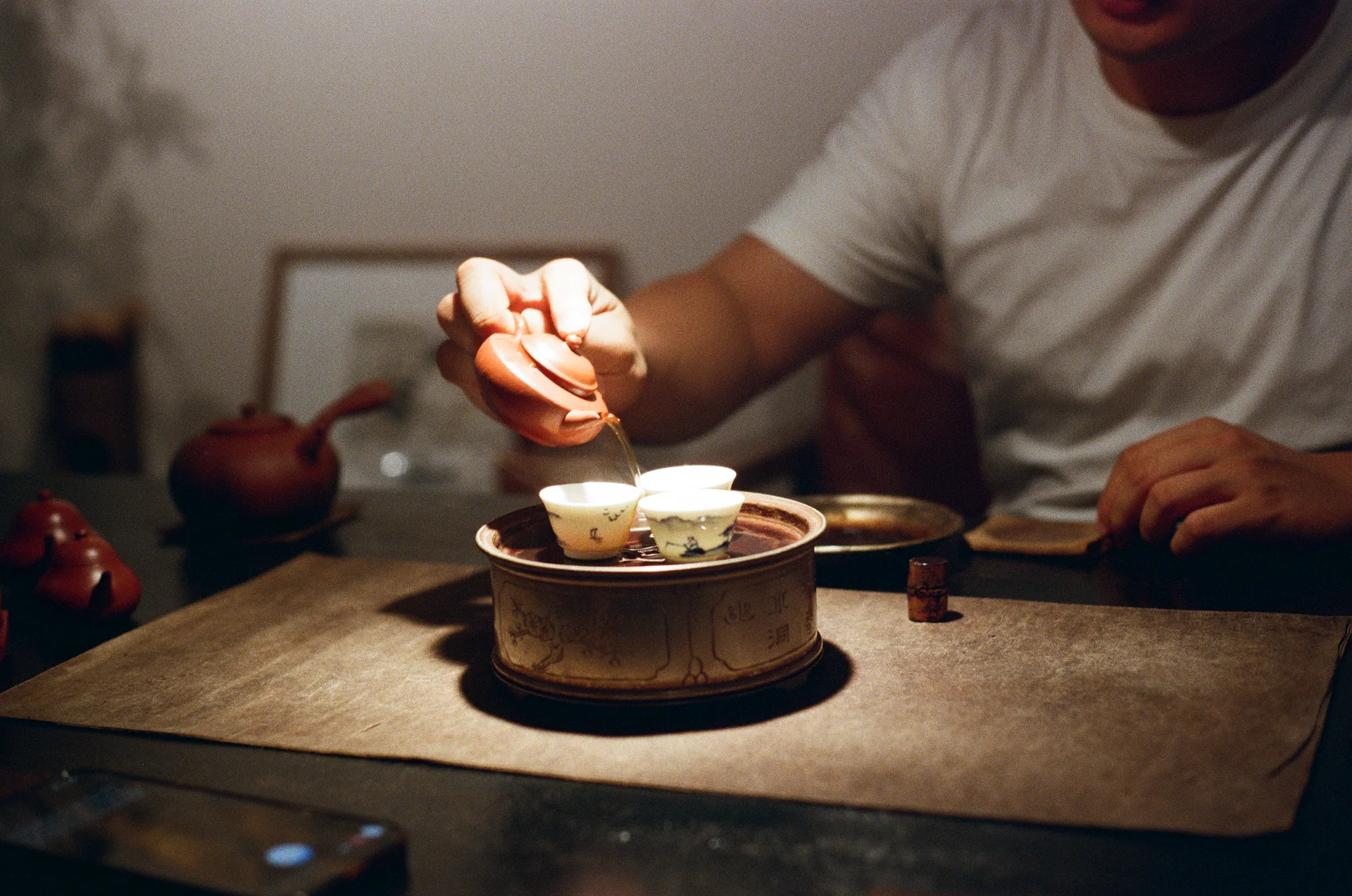
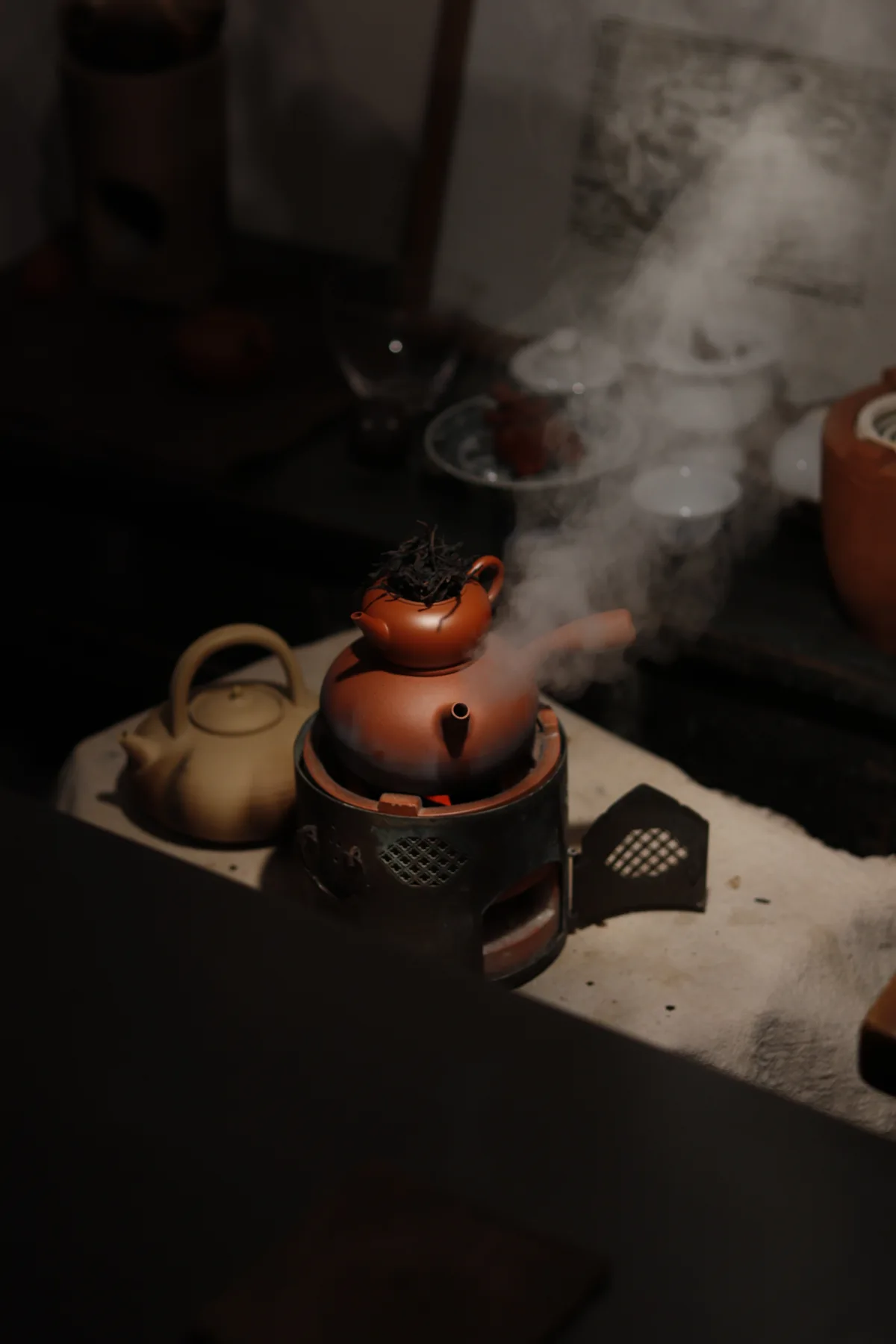
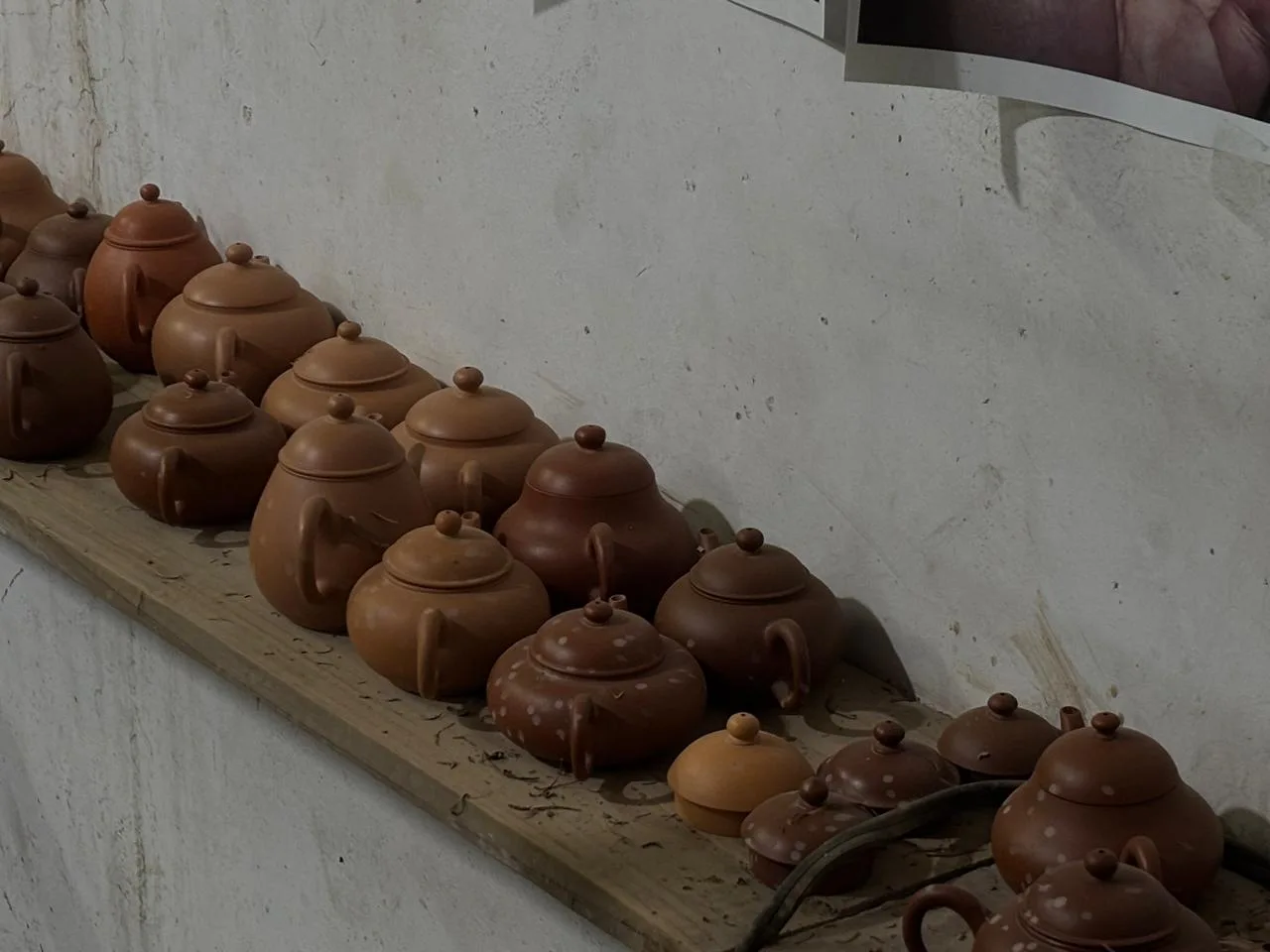
Traditionally, Gongfu tea is prepared with a compact teapot, often made from Chaozhou red clay, alongside small cups and a simple arrangement of brewing implements.
Water temperature, pouring speed, the arrangement of the cups and the timing of each infusion are all treated with care. The purpose is not ceremony for its own sake, but precision — extracting the fullest expression of the leaves while creating a shared rhythm between host and guests.
Tea as Daily Culture
This style of brewing became particularly closely associated with Phoenix Dancong, whose intense aromatic character responds especially well to concentrated Gongfu preparation.
Over generations, tea became more than an agricultural product in Chaozhou. It became part of everyday hospitality, family life, conversation and social exchange.
A Living Tradition
In 2008, Chaozhou Gongfu Tea Art was added to China’s national list of intangible cultural heritage. In 2022, Chinese traditional tea processing techniques and associated social practices were also inscribed on UNESCO’s Representative List of the Intangible Cultural Heritage of Humanity.
Today, Chaozhou remains a place where tea, teaware and brewing technique are closely connected. Phoenix Dancong, Chaozhou red-clay teapots and Gongfu brewing developed within the same cultural landscape, creating a tradition in which craftsmanship is present from the mountain and the kiln all the way to the final cup.
Yujian’s Studio
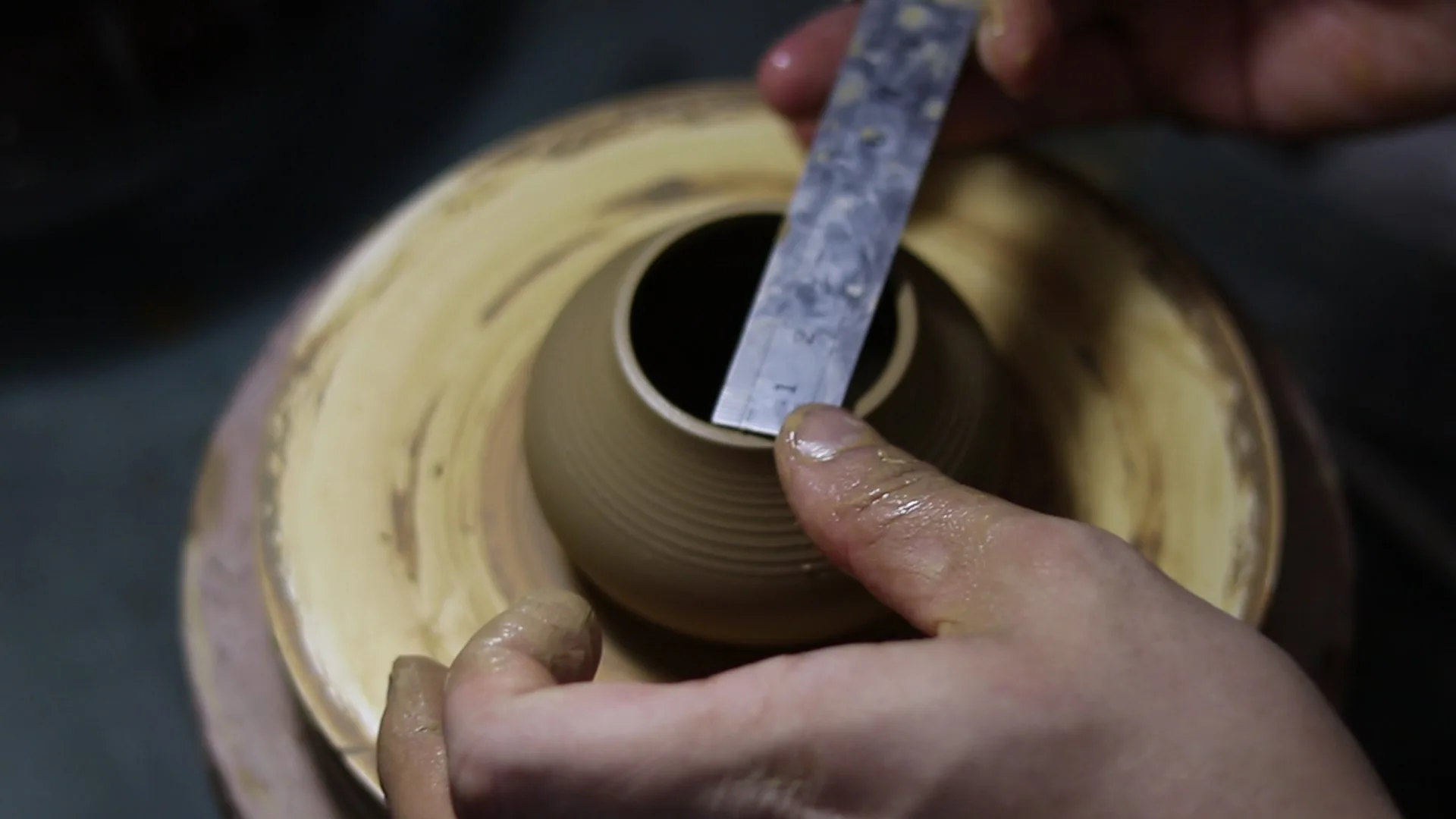
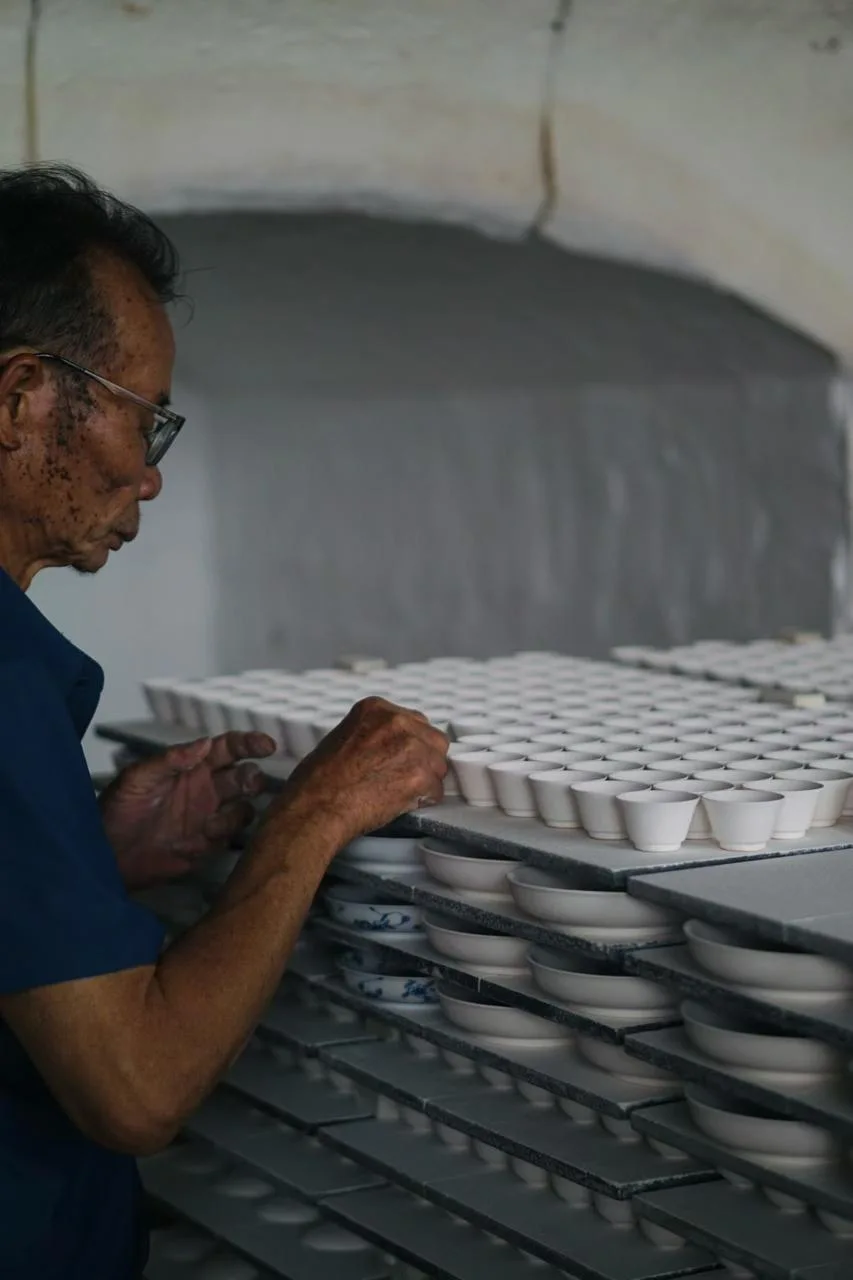
Yujian Cai is a ceramic artist based in Chaozhou, Guangdong. Born in Leping, Jiangxi, he graduated from Jingdezhen Ceramic University in 2013, majoring in Ceramic Design, and has been creating teaware since then.
Clay and Everyday Tea
Alongside his wife, ceramic artist Liu Xiaoyan, Yujian works to introduce Chaozhou tea culture to younger audiences in China and beyond. Their studio makes teapots specifically for Chaozhou Gongfu tea, connecting their ceramic practice with the region’s way of preparing and sharing tea.
The studio works with local Chaozhou Zhuni, or vermillion clay, and Tianni, or field clay. Alongside his work with plant ash glazes, these materials connect form, firing and the everyday use of a tea vessel.
Fenghuang Mountain
Fenghuang Mountain
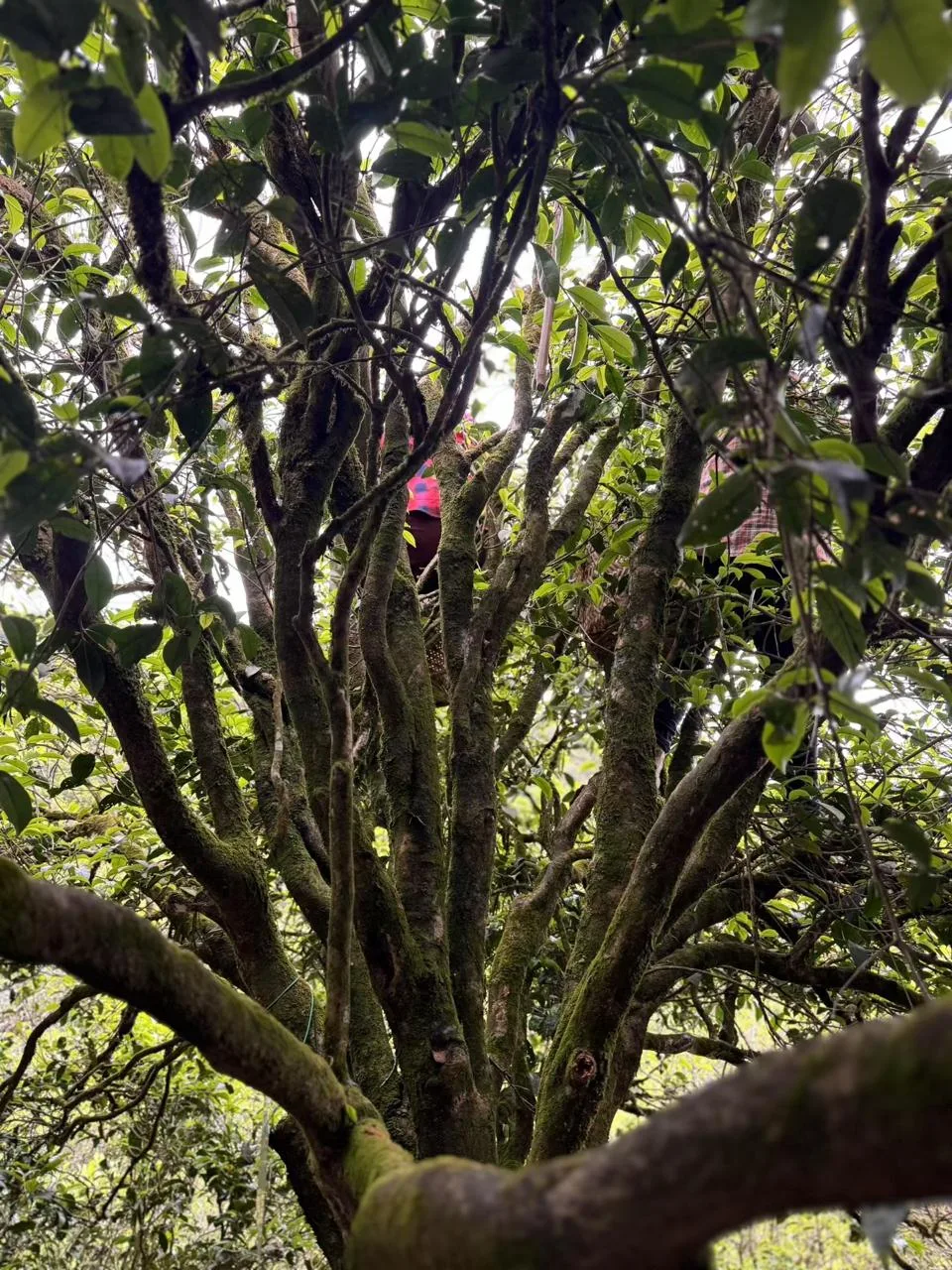
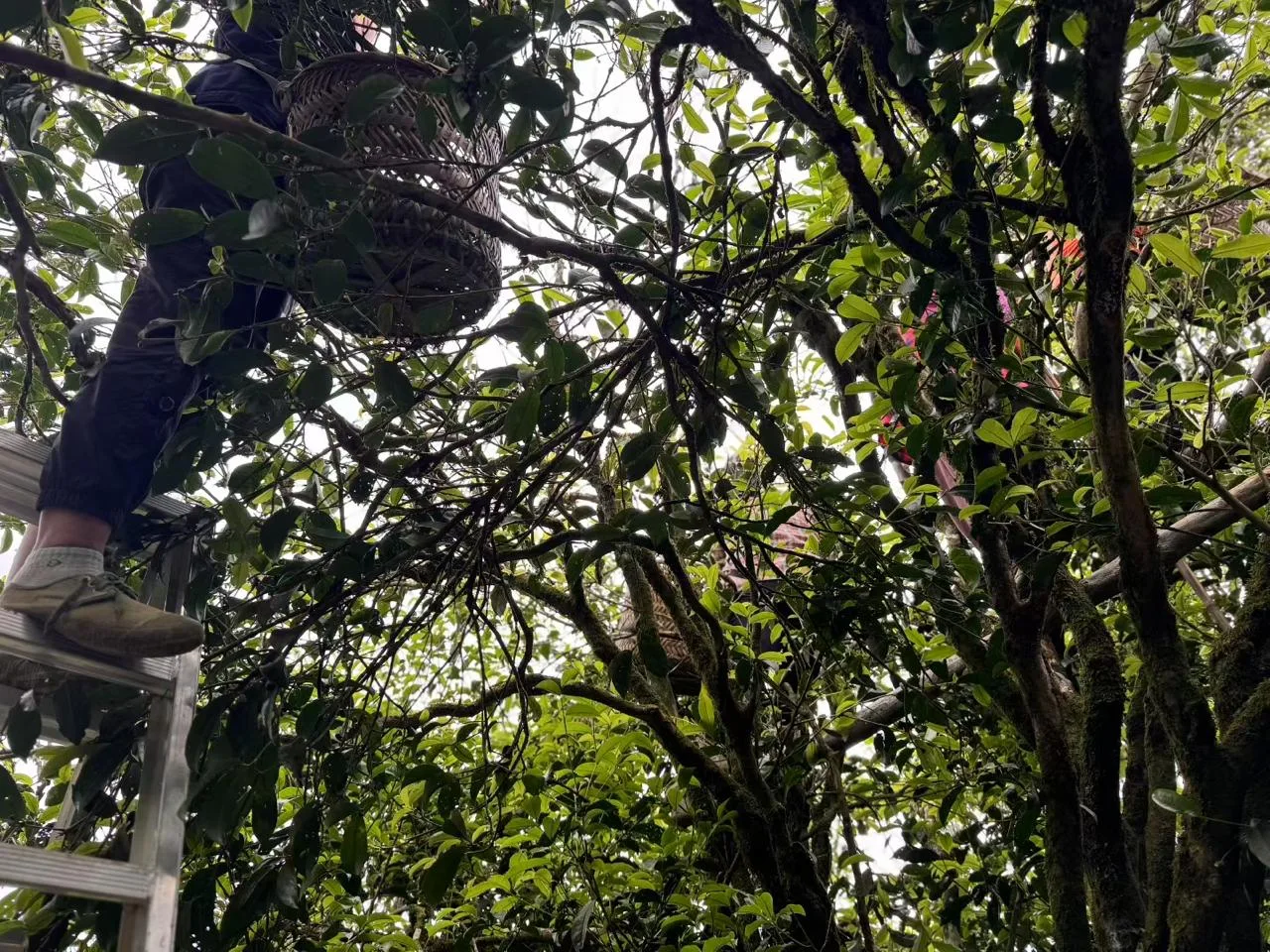
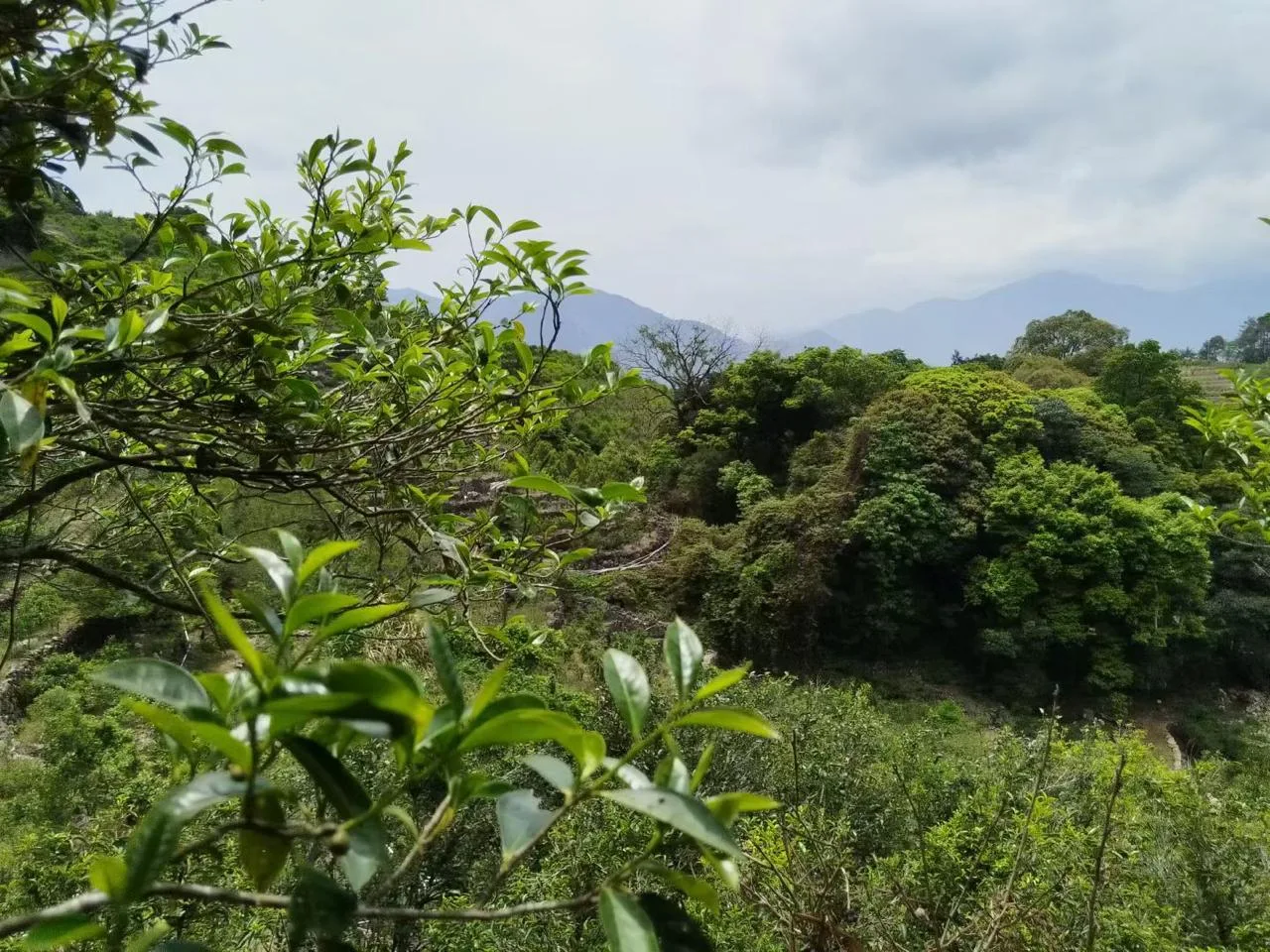
Fenghuang Mountain, also known as Phoenix Mountain or Fenghuangshan, lies at the heart of Chaozhou’s Phoenix Dancong tea tradition. Its mountain tea gardens connect the region’s distinctive oolongs with generations of cultivation and tea making.
Among these gardens, selected tea trees and cultivars are valued for their different aromatic characters. Flowers, fruit, honey and spice form part of the range associated with Phoenix Dancong, giving each tea its own expression across repeated infusions.
The mountain landscape and the knowledge of the people who tend and process the leaves are closely connected. From the tea gardens to the small teapots of Chaozhou, Fenghuang Mountain is part of a living tradition centred on fragrance, careful preparation and sharing tea.
Phoenix Dancong
Phoenix Dancong became one of the defining teas of the Chaozhou region. Its reputation comes from the extraordinary aromatic range found among its different cultivars and traditional fragrance types, which can evoke flowers, fruit, honey, spice, herbs and roasted notes.
The mountainous environment around Fenghuangshan, together with generations of selective cultivation and processing, helped shape a tea tradition centred on fragrance, complexity and repeated infusions.