Woodwork & Lacquerware
Chiju
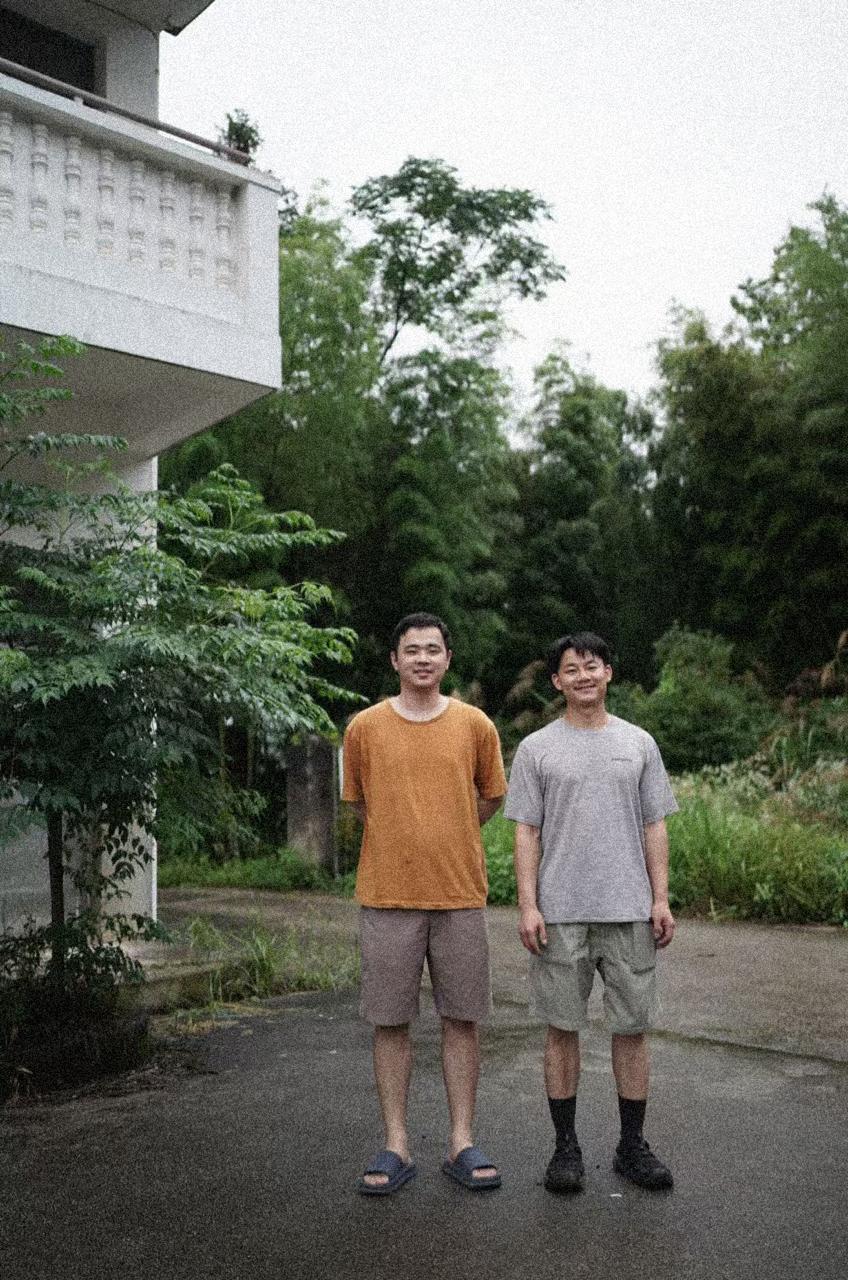
赤具Li Donghai, born in 1993 in Shandong, began studying furniture making in 2016 at a hardwood workshop in Northeast China. In 2017, he continued his training in Shijiazhuang, focusing on traditional mortise-and-tenon joinery.
Zhou Bo, originally from Hunan, traveled to Northeast China in 2016 to study furniture making. In 2017, together with his fellow apprentice Donghai, he co-founded a handmade furniture studio in Jingdezhen. Since 2018, he has been self-studying the making of wooden vessels and working with natural lacquer, a practice he continues to pursue today.
Selected Exhibitions
- Guangdong
- Hebei
- Guangdong
The practice
A shared beginning
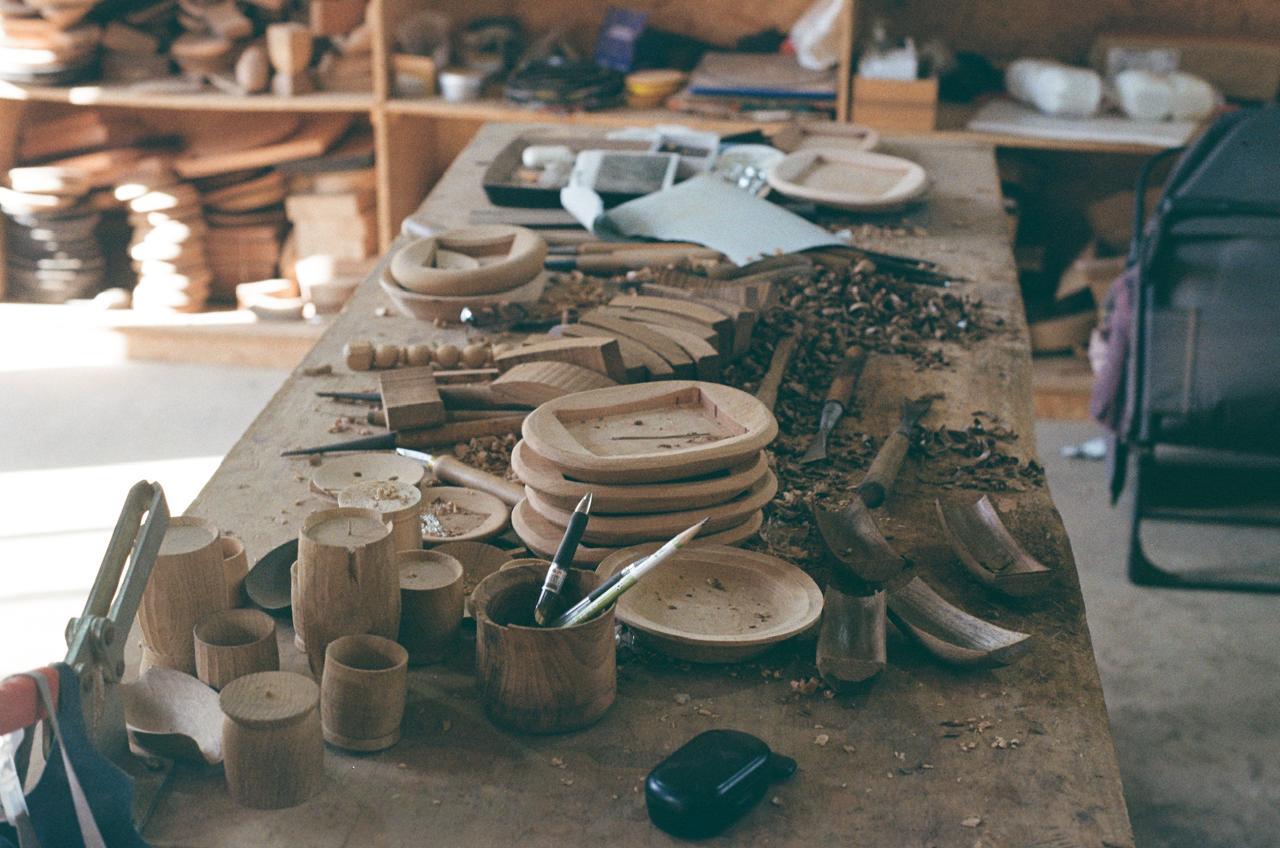
Chiju Studio was founded in 2017 by Zhou Bo and Li Donghai, fellow apprentices whose shared training in woodworking led them naturally into collaboration. Their studio is set within a former rural schoolhouse, a wide and open space once filled with children’s voices, now inhabited by wood, lacquer, and sustained making.
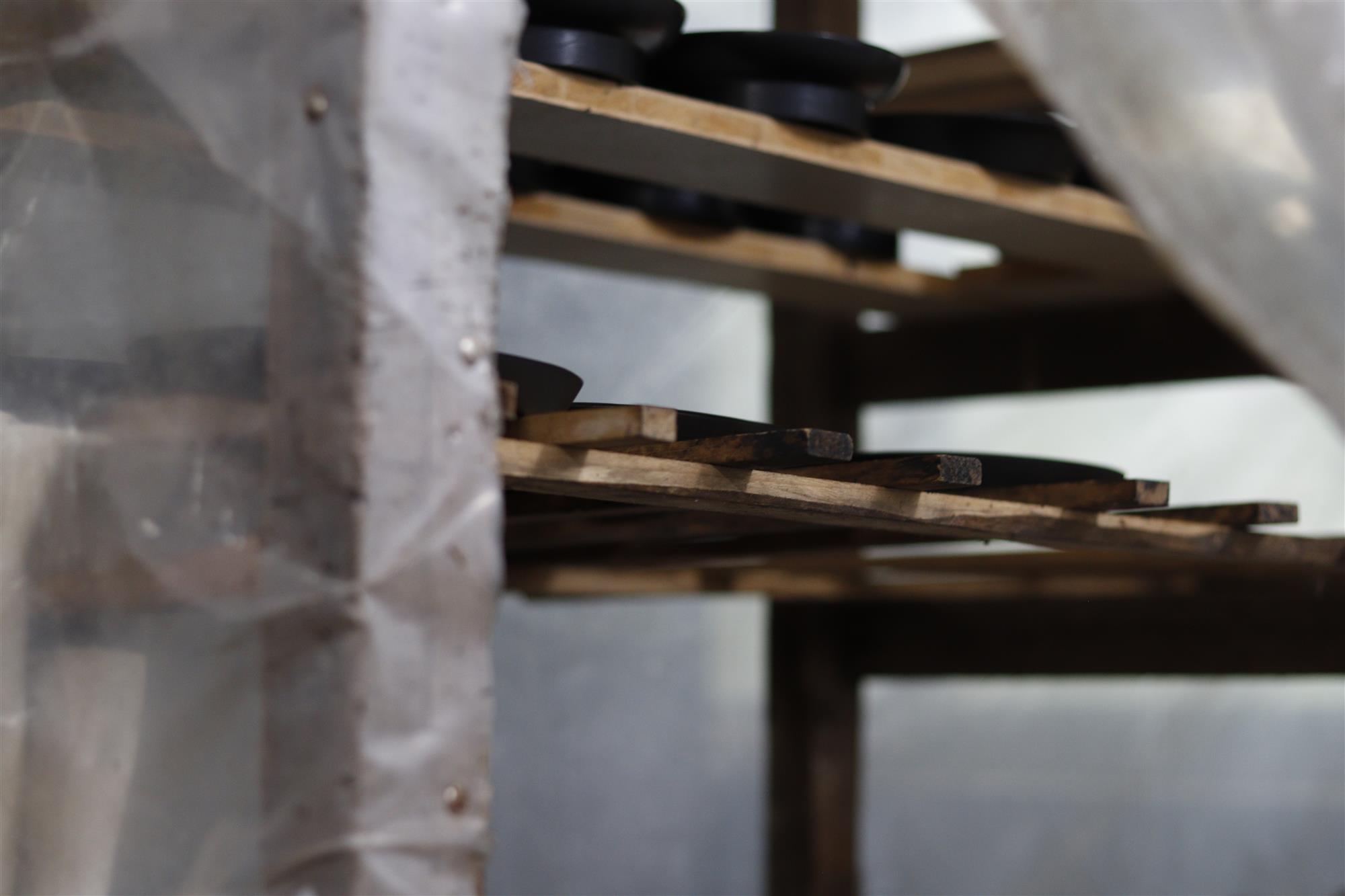
Even during the height of the summer rainy season, the workshop carries a dry, steady atmosphere, shaped by stacked timber and partially formed blanks absorbing moisture from the air. Here, people and materials coexist in balance, moving forward in rhythm with the cycles of nature.
The practice
Form & carving
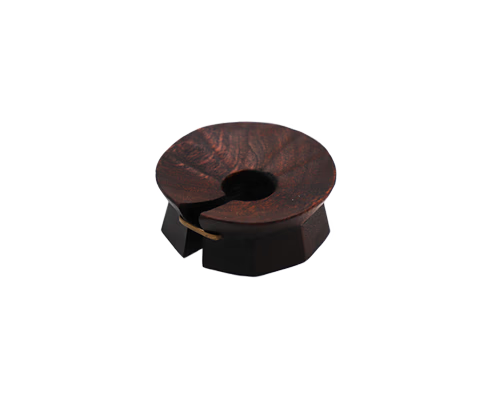
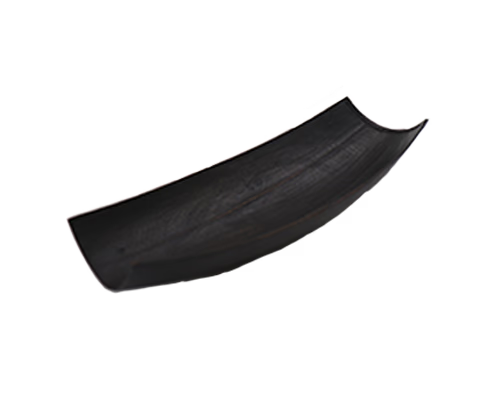
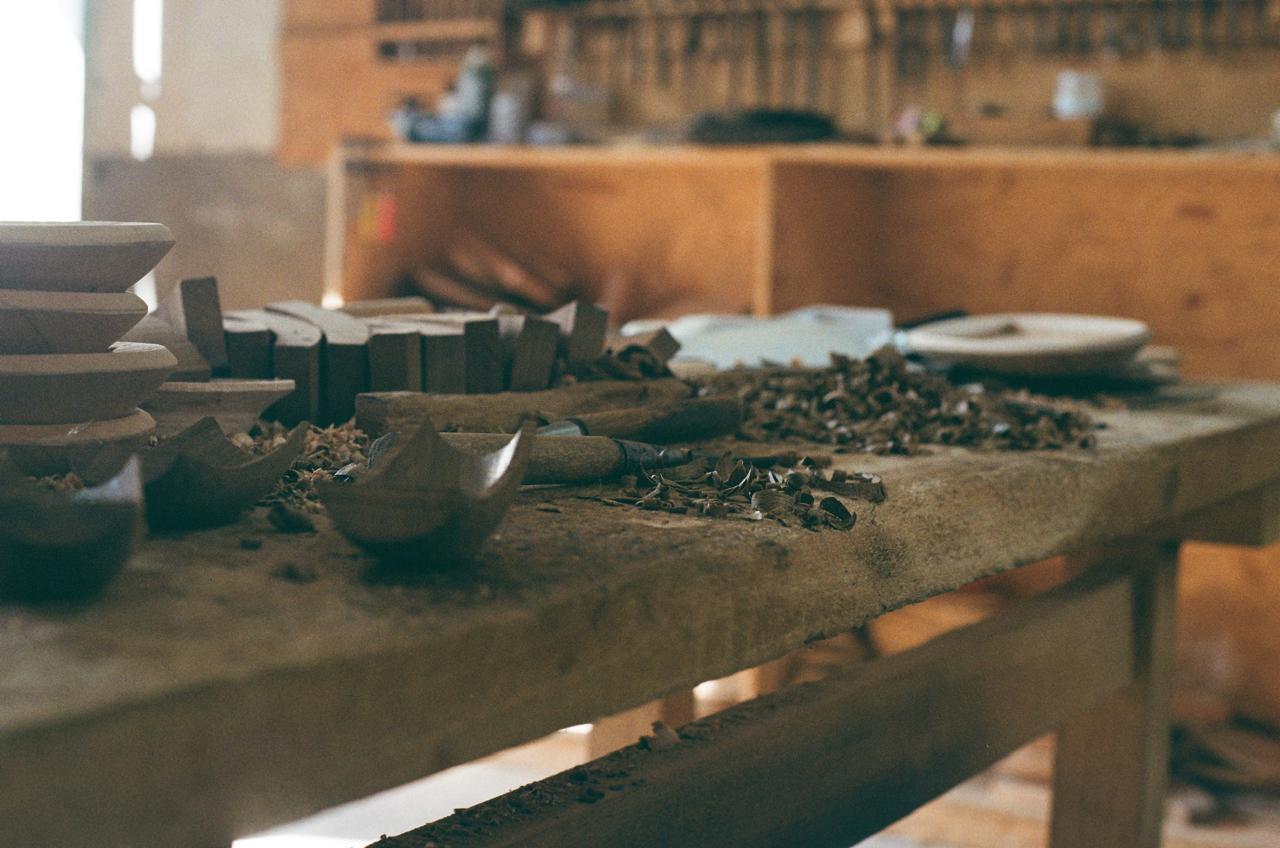
The division of work between the two makers is clear and complementary. Zhou Bo is responsible for form, shaping vessels directly from solid wood. All Chi Ju works are made from whole timber, including carefully collected aged wood as well as durable species such as cherry and ash. His approach is grounded in respect for material, preserving natural grain, knots, weathering, and traces of time while carefully avoiding the structural risks these qualities can bring.
Once the overall silhouette is established, each piece enters a long carving stage. Every cut must be decisive, neither rushed nor hesitant. Familiarity allows speed, and force gives clarity. Through this process, vessels emerge with restrained strength, precise proportions, and lines that hold tension without excess.
The practice
Layers of lacquer
Li Donghai takes over at the stage of lacquer finishing, continuing a lineage that reaches back thousands of years, when lacquer was already used to protect wooden vessels such as those found at the Hemudu site.
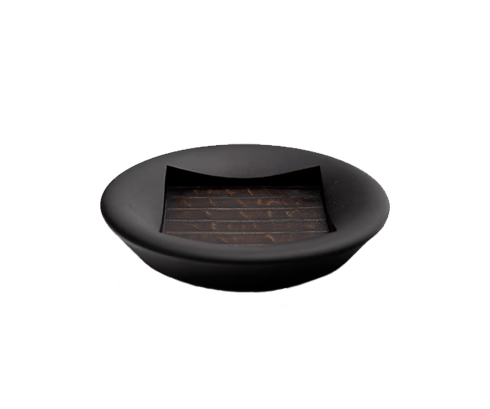
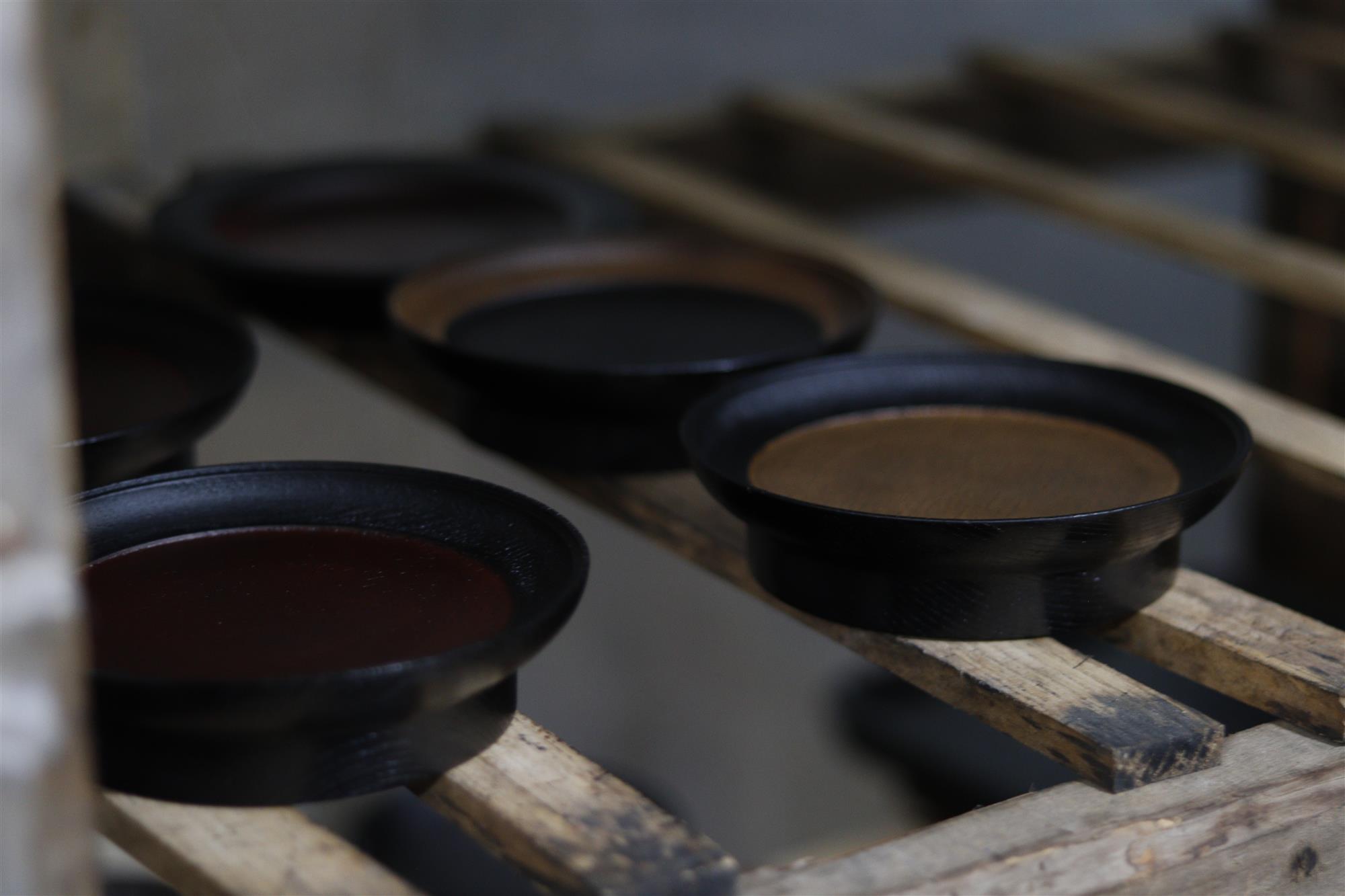
Lacquer is a material of contradiction, strong yet yielding, requiring humidity to cure and applied entirely by hand, while remaining physically demanding to work with. Through repeated cycles of grounding, wiping, polishing, ash application, paper and cloth lining, and sanding, Donghai experiments with material and color, not in pursuit of flawlessness, but through measured control. Emotion is conveyed through restraint.
Over time, the lacquer surfaces develop depth and density, subdued yet full, allowing the beauty of the wood to be extended rather than concealed.
The practice
A continuing journey
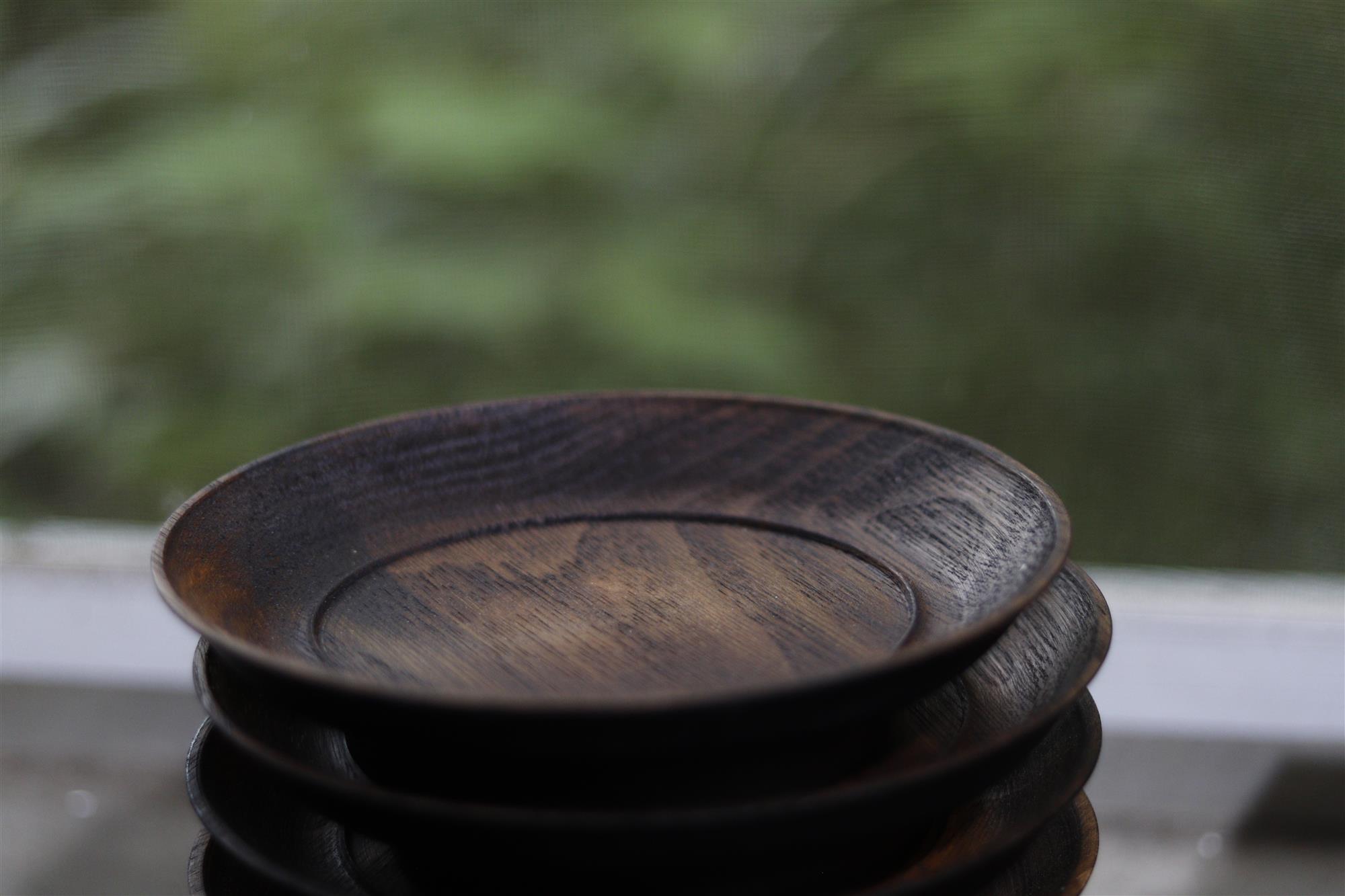
For Chi Ju, making is a slow and attentive process, shaped by long-term understanding rather than momentary inspiration. Their work seeks balance between use and presence, blending traditional craft knowledge with contemporary life.
Forms remain simple, while carving introduces vitality and movement. Their name, Chi, refers to exposure and origin, a return to material in its natural state and an honest connection between maker and user.
What feels new arises naturally, like tree rings tightening with time or resin slowly gathering within the lacquer tree. When these objects reach the hands of those who understand use, the journey does not conclude, but continues.
By Chiju