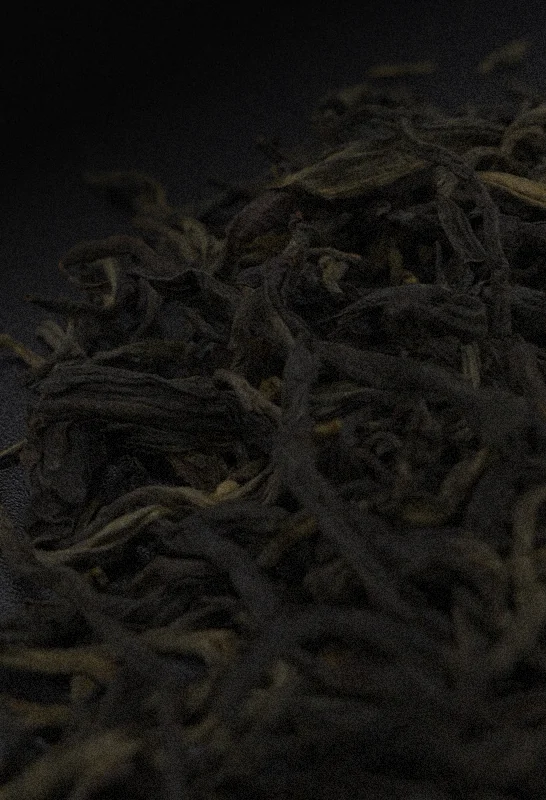
YiwuAncient Tree
A moment for tea
Yiwu names the Yunnan tea growing area; Ancient Tree describes the older tea trees used for this red tea.
Yiwu red tea.
Honeyed sweetness and fruit.
A rounded, lingering cup.
- Tea
- Yiwu Ancient Tree
- Type
- Yunnan red tea
- Origin
- Yiwu, Mengla County, Xishuangbanna, Yunnan, China
- Format
- Loose leaf
Brewing guide
Begin with gentle gongfu infusions. Adjust to suit your tea and water.
- Teaware
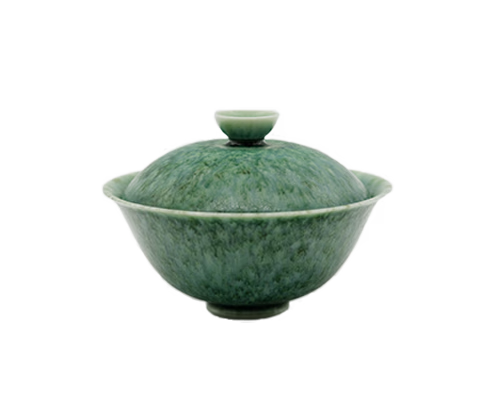
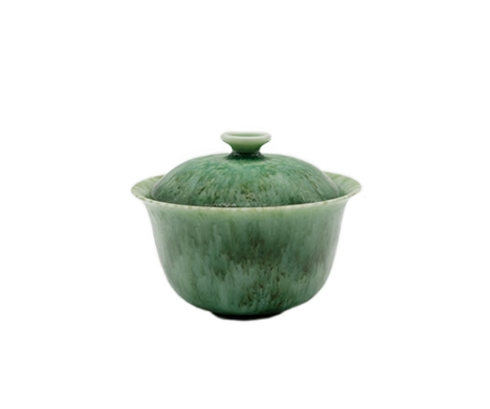
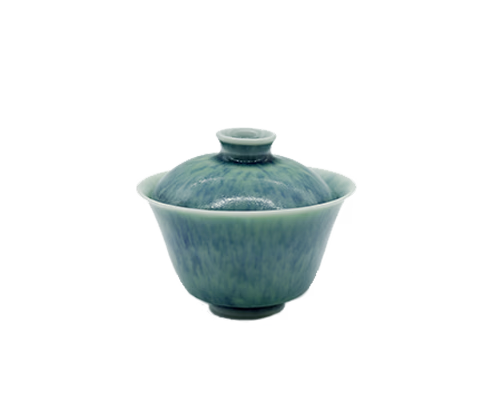
- A porcelain gaiwan, approximately 110 ml
- Tea amount
- 5 g
- Water temperature
- 85°C / 185°F
If the cup is too light, extend the infusion; if it becomes drying, shorten it. Use these timings as a starting point and adjust to taste.
Infusion timings
- First infusion
- 5 seconds, then pour out completely
- Following infusions
- Try 10, 15, 20, 30 and 50 seconds, adjusting to taste
Empty the vessel fully between pours and adjust the timing to taste.
Water ratio
Start with 5 g of tea per 110 ml of water.
Measure the water used in each infusion. Reuse the same leaves and adjust the quantity for a lighter or fuller cup.
Storage
Keep the tea well sealed in a cool, dry place, away from sunlight, moisture and strong smells. Reseal the packaging after each use to protect its fragrance.
Tasting notes
From landscape to cup
Yiwu
Ancient Tree
Yiwu red tea can bring together dark honey sweetness, soft fruit and the warmth of oats or toasted grain. A light floral aroma adds lift, while a smooth, substantial body carries the flavour into a lingering sweet finish.
Fragrance and texture come together in the cup: fruit becomes more apparent in the liquor, supported by rounded sweetness and gentle cereal notes.
The diagram illustrates that balance on a five point scale. Begin with gentle infusions and notice how sweetness, body and aroma shift as the tea opens; longer steeps may produce a stronger, more assertive cup.
← Return to the red tea collectionOrigin & processing
The place behind the leaf
Yiwu
A landscape shaped by tea
Yiwu · Mengla · Xishuangbanna · Yunnan
Yiwu and its wider tea landscape
This Yiwu Ancient Tree comes from Yiwu, in Mengla County, Xishuangbanna. Yiwu is a prominent name within the historic Six Great Tea Mountains and is especially associated with Pu erh. Its surrounding villages and gardens form a varied growing region, rather than a single uniform place.
Large leaf trees and local character
Yunnan is home to diverse large leaf tea populations, often described as Da Ye Zhong. In suitable conditions, tea plants develop into substantial trees with branching canopies. Local communities tend both older trees and younger gardens, drawing on the same regional plant heritage to produce different kinds of tea.
Mountain setting and local growing conditions help shape the leaf. This makes the garden’s location meaningful, while processing determines how that leaf becomes a finished tea. Yiwu’s reputation for Pu erh provides regional context; this selection expresses its origin through red tea processing.
From fresh leaf to red tea
The main stages are withering, rolling, oxidation and drying. Withering softens the fresh leaf, rolling breaks its structure, and oxidation develops the colour and aromatic character associated with red tea. Drying stabilises the finished leaf. The maker’s choices at each stage help determine the tea’s body, fragrance and balance.
What ancient tree means
The name describes the tea’s old tree designation. It does not, by itself, establish an exact age, elevation or village. Those details depend on the producer’s records, while the character in the cup also reflects the growing conditions and processing.