Tearoom Roji · Rock tea
ZhengyanDa Hong Pao
A moment for tea
Roasted aroma.
Layered sweetness.
A clean mineral finish.
- Tea
- Zhengyan Da Hong Pao
- Year
- 2025
- Collection
- Rock tea
- Format
- Loose leaf · 50 g
Da Hong Pao brewing guide
A suggested gongfu starting point. Adjust the timing to your tea and taste.
- Teaware
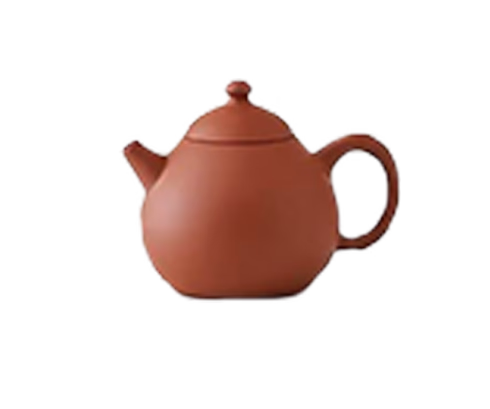
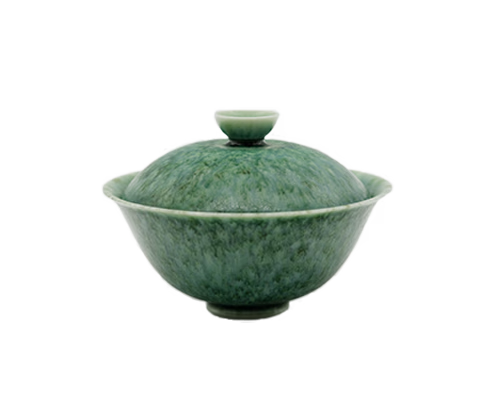
- A gaiwan or small teapot
- Water temperature
- Near boiling · 99–100°C
- First infusion
- 25 seconds
- Following infusions
- Add around 5 seconds each time
Pour off the tea completely after each infusion. If the brew is too strong, shorten the next steep; if it is too light, steep a little longer. Continue while the leaves still give a flavour you enjoy.
General Da Hong Pao guidance, rather than batch-specific instructions.
Recommended tea & water ratio
For the gongfu method above, start with 5 g of dry leaf per 100 ml of water — 1 g per 20 ml.
| Water | Tea |
|---|---|
| 100 ml | 5 g |
| 140 ml | 7 g |
| 150 ml | 7.5 g |
| 200 ml | 10 g |
Use the amount of water you actually pour, rather than filling the vessel to its rim. Reuse the same leaves for subsequent infusions.
Prefer a lighter cup? Reduce the leaf slightly or shorten your steep. Keep the water amount consistent as you adjust.
Shipping & availability
Please confirm availability and delivery options directly with Tearoom Roji before purchasing.
Contact Tearoom Roji ↗Price and availability confirmed on the original store.
From landscape to cup
The character
of Da Hong Pao.
Wuyi Da Hong Pao oolong tea offers a deep, roasted aroma with notes of mineral rock, dark fruit, and warm spice. The flavor is full and steady, with a natural sweetness that lingers on the palate and subtle hints of cocoa, cedar, and toasted grain. Its character lies in balance — layered, evolving taste that unfolds gradually, carried by a clean mineral finish known as “rock rhyme” (岩韵).
← Return to the tea collectionThe place behind the leaf · 正岩
Zhengyan.
The heart of Wuyi.
Wuyishan · Fujian · China
What is Zhengyan?
Zhengyan (正岩), often translated as “true rock,” refers to the prized core rock-tea growing area of Wuyishan in Fujian. Tea gardens sit among cliffs and sheltered valleys in this distinctive landscape. The name describes a place of origin, rather than a single tea cultivar.
Why this place is revered
Weathered rock soils, canyon microclimates and the surrounding ecology help shape the character of Wuyi rock tea. Zhengyan is sought after for its association with yanyun (岩韵), or “rock rhyme”: a quality of aroma, texture and lingering flavour, rather than simply a taste of stone. Growing conditions and the tea maker’s work both matter; origin alone does not guarantee a great cup.
A landscape with a long memory
Wuyi’s tea culture developed alongside its temples, villages and scholarly traditions. UNESCO’s nomination records describe tea-factory remains dating from the Ming dynasty through the Republic of China, as well as Qing-era inscriptions concerning tea trading and imperial tribute. These traces show how deeply tea became woven into the region’s daily life and economy.
Mount Wuyi became a UNESCO World Heritage site in 1999 for both its natural and cultural importance. Protecting this landscape preserves more than a celebrated tea origin: it also safeguards forests, waterways and a living cultural heritage.
Further reading: UNESCO · Mount Wuyi ↗Tea heritage records ↗Research on Wuyi tea origins ↗
For your tea table